THE SIRENS WERE HAILINg
By
Martin Latimeri
PublishAmerica
Baltimore
© 2010 by Martin Latimeri.
All rights reserved. No part of this book may be reproduced, stored in a retrieval system or transmitted in any form or by any means without the prior written permission of the publishers, except by a reviewer who may quote brief passages in a review to be printed in a newspaper, magazine or journal.
First printing
All characters in this book are fictitious, and any resemblance to real persons, living or dead, is coincidental.
PublishAmerica has allowed this work to remain exactly as the author intended, verbatim, without editorial input.
ISBN: 978-1-4489-5277-9
PUBLISHED BY PUBLISHAMERICA, LLLP
www.publishamerica.com
Baltimore
Printed in the United States of America
This is a voice from the aft. The true story of those last steam and motor ships, manned with the wandering souls of the seamen—the unique race of the men which, soon after the era of the steamship, disappeared forever.
All coiled down, an’ it’s time for us to go; Every sail’s furled in a neat harbour stow; Another ship for me, an’ for her another crew— An’ so long sailorsman—good luck to you!
—Cicely Fox Smith, So Long (All Coiled Down) In Sea Songs and Ballads 1917-1922.
Chapter 1
s
My name is Charles, but call me Charlie as Everybody does. I’ve been in the merchant marine service for a quite long time so I couldn’t see having a bourgeois occupation. I rather regard myself as a Jack of all trades than a regular factory worker.
It was an early morning in December when I arrived in town, been travelled by the very early yellow auto bus and when she finally stopped I found it in front of the station, where I alighted with my gears.
The north-east wind was blowing and the lamps above the empty street swung up and down creaking and there were quickly flashing across the snow-covered pavement.
I had the message in my pocket sent by the harbour master, it was short but clear order to come and to sign on a ship, to go to sea. She was the seagoing ship I’d been waiting for long time. The call of the sea offered me a way out of my dim, tiny, joyless village, to see the world.
5
MARTIN LATIMERI
With great difficulty I had acquired all the documents needed to become as a sailor. In the meantime, I working hard in the forest as a woodcutter and spent all my leisure time in the small, lifeless village. After all that you would be eager to find something else, ripe to sign onto a ship of any kind, of any size, just to see the world a bit.
I felt the street cold and hard under my soles. I was looking for the next ride to the outer harbour. Still I couldn’t see anything like a means of transport but just a couple of long-nosed auto buses standing idle with their motors murmuring. The illuminated signs above their windshield were empty. They stood there side by side at the platform and no one of them didn’t seem to be starting anywhere. “No more waiting,” I said to myself, making up my mind to walk. I pulled down my fur cap, picked up my gear, and set off on foot for the harbour.
The morning was dull and dim and everything was white with cold snow. The wind blew down and the flying snow powdered my fur cap in a thin white layer and the touch of the wind turned my cheeks numb.
I went on, pacing my way down the road towards the port. The road was lined with electric poles and the wires sang and there was a soud as if hungry wolves were howling at the moon.
The road ran beside the river, then up the bank. A locomotive went by, and when it was gone I followed the rail road after the train.
On my right side I saw a plain, grey-painted wooden hut; it was the well-known building of the port office, the office of “Old Hook nose,” the harbour master who held his post in that low-roofed house. Having stumbled along that rough track about a kilometre or so, I passed the red-brick customs house. I went further and caught my first glimpse of the cranes. I could see their standing arms towering well over the grey iron roofs of the warehouses. Behind them I made out the shape of a steamship, lying alongside the quay.
6
THE SIRENS WERE HAILING
There was flood of thoughts in my head and my brain occupied by suspictions of all about the future ahead of me. Many questions came to me and troubled my happiness. What ship is this? What kind of ship would she be? The ship might be all right, but what about the ship’s company? I knew some sailors, but what kind of brute waited for me aboard that unknown ship?
Things would be different aboard the ship: an entire new world I could not have imagined.
Having reached the outer end of the low-roofed warehouse I ran into a bunch of longshoremen standing by the wall. In spite of the bitterly cold morning they were bareheaded, their hands buried deep in their overcoat pockets. It seemed that they were idly waiting for something to happen.
I made past them and their heads turned to watch me go by. A blast of wind blew up a black cloud of coal and ash, and for a while there was a black swirl in the air. The longshoremen turned their backs against the wind and pulled their bare heads further down, seeking more shelter in their upturned collars.
I walked on and came under a yellow circle of gangway light where I paused for breath. Looking up, I saw the ship’s side in front of me. There she was. She was riding high in the water with her great and lofty grey-painted hull. I could see regular lines of rivets running over her hull just like seams of stitches. To me she was massive and colossal, like a floating city built of wood and steel, fitted with lights and chimneys. A few lamps were burning above the deck line, giving a poor light and making deep shadows over the dim scene. I stood there on the quayside for awhile, surveying her and trembling with tension. I could hear a sighing sound, like a muffled whistle, coming from the crooked horns of the ventilators. There was a smell, too, the sharp smell of burning coal. A black smokestack stood straight up like a pencil, pointing toward the murky sky above. There was a white band around the smokestack, and a decorated scarlet vase was seen on it.
7
MARTIN LATIMERI
I was struck with the scene: all those white-painted rails and davits, the lifeboats, all the multitudes of parts, and the alien atmosphere around the ship. The whole scene breathed the adventure and romance of the sea.
A black figure of a man, wearing a long, mantel-like overcoat, crossed the quay. He stopped next to me and after glancing down at my bag, the man greeted me by saying, “Are you going to sign on the ship?”
“Yes,” I replied.
“Bad times, bad luck,” the man said. “I’m looking for a ship too, but I’ve been stuck on the shore. Its winter, you know. It’s bad for the sailors. Could you spare some money for a cup of coffee?”
Standing there on the quay in his strange clothes, his hand outstretched to beg, this unfortunate man was a living symbol of the uncertainty of the trade of the sailor—like a warning flag raised beside the ship. I dug in my pocket and brought out three coins left over from the bus Fare.
Then I started for the gangway. When I put my foot on the first step of the gangway, a spout of water swept across it, soaking my shoes. There was a hole in the ship’s side, and the condenser water showered out onto the quay. A short arc of warm water splashed and steamed in the chilly air. With soaking shoes I continued scrambling up along the gangway.
The gangway was hanging from a crooked arm, extending from the upper deck and it swung left and right as I climbed. Having reached the upper top of the gangway I stopped for a while and saw a square opening before me. There was a hand-railed iron ladder leading up the boat deck. Looking up I could see a part of the bow of a lifeboat, peeping over the break of the boat-deck. I saw heavy blocks and tackle hanging above the boats.
An iron door was open into the passageway. I went on, taking a long stride over the high threshold, and entered the passageway that
8
THE SIRENS WERE HAILING
seemed to lead to the after deck. A weak glow from a couple of poor lamps lit the passageway. I saw a single row of doors. Two of them were open, and a path of electric light from the first doorway cut across the dim passageway. when peered though the lighted doorway I saw that it was the galley. There was a fine smell of coffee in the air, and I felt smells of cooked food.
There was an old man, wearing a dirty cook’s suit. The man was pumping water into a sink beneath and he was doing it with very slow and lazy movements—the man, evidently, was the cook in this galley.
For a moment I stood in the glare of the lighted doorway, waiting for the cook to take notice of my presence, but I didn’t catch the man’s attention. The man in the galley did not even glance at the doorway. I tried to introduce myself: “I’m new here.”
“Speak to the mate! You, you.” the cook snapped angrily. He went on with his work with torpid motions.
Suddenly there was a sound: the rhythmic snapping of heels against the iron deck. A woman entered the galley. She was dark and tall. She gave a quick, nervous glance at me and my bag. “Are you the new mess boy?” she asked, then turned and left without waiting for my answer.
She was back accompanied by a very tall man. The man wore an officer’s cap towering so high, that as he put his head under the galley doorway he had to bend down to avoid hitting his head on the door frame above.
“Have you ever been at sea before?” the mate demanded. I was just about to reply that I had been working in the dockyard and knew the vessels, but the mate turned his back, went away and was out of sight. I heard his footsteps echoing from the deck as he went on his way up to the boat deck. “You will start tomorrow morning at seven o’clock,” the woman said.
9
MARTIN LATIMERI
Picking up my bag from the stone floor of the galley. I didn’t know where to go next as there was a light touch of a hand on my shoulder. When I turned I saw a boy, around my own age, with grey eyes and flat, round face.
“Hi, you’re the new one, aren’t you?” I nodded. He added: “You’re signing on to take my place?” I nodded. “Get your bag along and let’s go!” the boy said. He shoved open the opposite double door to the passageway, and then started advancing with energetic steps. I followed him. In a row we went along the passageway— which way, I had no idea. The passageway was poorly lit; there was a solitary lamp on the ceiling. The echoes of our footsteps rang between steel walls. The boy opened another iron door and jumped over the threshold. We came out on deck on the starboard side of the ship. We kept going in a row around a corner, and then we were amidships of the fore part. Finally, the boy stopped before a teak door, which was fitted with a shiny brass knob. After pulling a brass key from his pocket, the boy unlocked the door. “So, when we put in, you must remember, keep this door locked and keep a good lookout. All kinds of people hang around aboard here,” he said.
There was a deck cabin behind the door, no bigger than a broom closet. The cabin was plainly furnished. There was a bare bunk, by riveted bulkhead, and a clapper board; the cupboard was fitted with a reversible patent so that, when opening the clapper, the washbasin turned out. When the pipe was turned, the water flowed into the dish and when the slap was lifted up, the washbasin emptied itself and it disappeared to be covered by the clapper board.
Daylight came into the small cabin through a single porthole, and a naked lamp hung from the ceiling, giving a faint glow. The air of the cabin was suffocating warm and there was a smell of steam, a sort of vapour smell that whirled everywhere.
10
THE SIRENS WERE HAILING
in the ship’s interior. The boy lifted his bag and laid it on the bed and began packing his stuff there.
“This is your cabin now,” he said. “Make your home here. I will hang around this day here, but in the evening I will get paid off and vanish. Don’t worry, I will show to you around. The woman so called Rissa, she is the steward, and our boss, you know; you will be responsible to her. The big fellow you saw there is the chief mate, so called ‘Bloke’, number one, and very demanding man, more important than the sun itself. Watch the cook, that bloke is Jim-jams and try to member that the cook has the biggest knives on board.”
In addition he told me that in the amidships lives the captain, the deck officers, the engineers, the cook, and Rise; the rest of the crew were settled in the crew’s quarters under the poop at the rear of the ship.
Next we moved out to the deck, close by the gunwale, on the deck was seen a conical heap of slag and ash and all the time a monotonous tap, tap, was hearing from below . “It’s the dynamo,” the boy said. “It makes the power for the lamps aboard, and there.” He pointed by his hand towards the open black iron doorway, in which was seen a smutty bars and pitch-dark bottomless abyss under; down below was accessed by means of a vertical iron ladder.
“There down below there is the stoke-hold, black hole; it’s the place for the stockier. The place where goes the bad boys when they died.”
The ladder there is called as the black Jacob’s ladder.” From the bottom of this pitch dark abyss came the sound of shovel that was boosted along iron plates.
“When you ever come and go, between the pantry and this cabin, don’t use the way through the galley. Try to avoid use that way,
11
MARTIN LATIMERI
because the cook is getting mad. Try to find another way like this.” The boy waved to me to follow him.
We went on again, at first along the alleyway, and then through the door upon the iron bridge, which was secured with an iron safety rails, the handrails were polished with hard use. The narrow bridge led over the engine top, and the warm air around us was thick with warm, oily steam, down below, under a metal grating, there was seen, in the increased natural light of the skylight, numerous control valves, and great amount of tubes of different thickness, circulating by the walls. A platform, or upper stage on the top of the main engine, was made of iron bars, three upper head of the huge cylinders of the steam main engine, reached up to the level of the upper platform and a narrow ladder ran deep down and disappeared into the dusk of the engine room bottom. There, deep down below on the bottom of the ship I saw vague shapes of human heads, moving down there in the dusk of the engine room, to and forth, like disembodied heads swinging in the air.
12
Chapter 2
s
The officer’s mess-room was the space where all the officers of the ship gathered to eat and drink together; it was also one part of my working environment. Despite of its proud name, it was a modest room; which was furnished with a long narrow table and wooden benches on either side of it; you could find benches like that in every parks, the table was fitted with sideboards, which could be quickly raised in bad weather. There was a narrow mess servant scullery behind the wall. All the water needed do the dishes had to be carried in bucket under the hand pump in the corridor; then there was a steam pipe which under the bucket was placed, and when the valve was turned open a jet of steam shot out into water with sound of loud thunder and with such force that the water in budget turned in warm in less than a minute.
The boy was as on pins and needles, he was keen to leave. “Of course you’ll get along,” he exclaimed. “There is no problem
at all. Everything will be all right. You just lay down the mugs and cups on the table and get the grub out from the galley; then you guard them as they eat, in the pantry, ready to act if; some one of them needs something. When the all is over and last of the eater had vanished his meal, you wash up the dishes, and so your work of that
13
MARTIN LATIMERI
day is over. It’s so easy. Well, there are also cleaning jobs to do, but Rissa will guide it to you.”
He paused to getting his hair creamed, and, dressed up in a leather blouse, and then anxiously started strolling between the outer rail and the cabin, he showed up his wristwatch.
“You also should have one like this. This is an Atlantic; this sort of thing you can have from Belton in Poland.”
He took out his blue-covered passport, checked it, and then put it into his outer breast pocket so that the upper part of the passport remained in sight. “Shore people will know that I am a sailor. It will blow a good effect to the women.”
I watched his fussing. “To a motor ship, motor ship I want to. She must be, I want to sign on next,” he said. “They are another kind of ship. Not like this coal tramp shipping.” then he smile and said;” Do you know how they call this ship?”
I shook my head.
“The vodka Johan,” he said with amusement.
Rissa appeared on deck with her skirt swinging. “To the captain’s salon, both of you!” was her order.
The main salon on board the ship was a part of the captain’s department; in addition to the sophisticated atmosphere there was an air of foreign origin, rare scents and the odour of cigars and precious wood. There was a lot of plush and lustrous brass as well, and a real armchairs and maroon curtains. From this kind of environment comes the authority of the ship’s master. We came in this sanctuary as two peasants come into a mansion. The table’s glossy surface was covered with very official-looking papers. The muster roll was folded open, the coffee set was laid on the other end of the table, and I got an unwittingly thought that the coffee wasn’t there for us. An old woman and a man sat on the sofa behind the table. Later I got to know that they were in attendance to be agents for the National Board of Navigation. All of them were clearly
14
THE SIRENS WERE HAILING
showing that essence of authority; it could be seen as extra-rigidity in their already taciturn being.
On the right side of this engagement party, a bit apart, in the armchair, sat the captain of the ship; he was a middle-aged and pale-faced man, whose face was full of lines and grooves. Saying no hello, he glanced over us as the master used look at his subjects, standing there on the red carpet with their matted hair and holding their hats in their hands.
Behind the table the old woman raised her head and looked over her glasses toward us.
“Who is the new one?” I stepped ahead. “I am.”
“You will sign on as the mess room boy. Is that so? Really?” the woman glanced to the captain. “And this other fellow will be sign out?”
“Yes.”
Several seals were stamped on the papers and several signatures were given too many papers. I had to put my name down all to these papers, the occasion, which felt very solemn to me, was soon over. I got a small pay-book with my photo. When I, out side the salon on deck, examined this book I saw there a stamp and place and time of the signing. All these notes were made by an old-fashioned cursive, and were evident that I was now a sailor, a small one, but a sailor nonetheless.
Later the same evening when I was unloading my suitcase in the cabin I heard from out side a hoarse blast of a foghorn. I finished my task and went out to the deck to see what that all about. Standing by the rail I looked out. There was a tugboat with her slow black hull, it was a stubborn-looking small vessel; her bow curved backward and she puffed a black smoke from her funnel. The smoke rifled slowly over the icy water and there was a smell of burned coal in air and
15
MARTIN LATIMERI
two motionless figures of men, were standing on her deck. Suddenly heavy drops of condensed water rained down about me; overhead, from the top of the funnel the hot drops of the hissing steam was falling and the ship’s fog-horn begun a wild howl, making reply to the tug’s call. It was time to sail.
16
Chapter 3
s
In the night I was awakened by the feeling that the ship was rolling, I felt how the small cabin rocked slowly from side to side; there was a vibration and the ship’s hull trembled and the clapper board made a noise like a low tat-too. I switched on the light and lie on the bunk fully clothed. Then I heard a noise; there, outside of the cabin, some object was dragging along the deck; I heard a crashing sound as a wave hit the hatch in the bulwark and something was shovelled overboard. Suddenly there was a growing of voices and a great tramping of feet rushing on the ladder leading up to the boat deck, then there was a tumult, which sounded as if number of persons were gathered on deck, outside of my cabin.
I sat on my bunk and listened. What was this all about? When I unlocked the door, pushed it ajar, and peeped into darkness I saw two human figures standing near by the rail. The scene was illuminated by a weak lamp on the bulkhead making the bulwark lustrous with the wet skin of iron. Beyond the bulwark, there was the vast emptiness of the dark sea, from where the sound of the waves and the moan of the wind could be heard. One of these men wore an old military blouse and a woollen hat was pulled over his head. Another character, next to the first one has nothing but bunch of hair on his head, the man stood half-faced to the light; he seemed to be
17
MARTIN LATIMERI
a lean, lightly dressed black man and was close to an ash-dumper that was attached to the bulwark.
The yellow wedge of light from the door cut across the darkness and hit the two men standing by rail; white eyeballs flashed and the white sweatband stood out with a clear stripe against the black skin of the man. I shut the door. I didn’t know what the time was and I lay down half-awake on the bunk. Later, how much later I have no knowledge. I was awakened by a loud banging on the door and there was a voice crying outside: “Wake up! Wake up! It’s six o’clock! Wake up, you!”
It was quarter-past six as I staggered into the mess room in which I found Rissa: she was sitting at the end of the table with a cup of coffee in front of her, smoking a cigarette. She was a large woman with dark hair; there was shadow on her upper lip as a fair moustache. When she spoke there was deep alto in her tone. She could have been about age of thirty or less; the strong eyebrows and thick dark hair gave her a stern expression; by all accounts she appeared to have a strong character. When she saw my entering, she glanced at me.
“I was told that you have locked the cabin’s door. Is it true?” she asked.
“Who told you?”
“The watch told me that the door was locked,” she said. I nodded.
“You don’t keep the door locked at sea. Shore people locked their doors, but not seamen on the open sea. If something happens, you will be locked in there and will go down with the ship. Try to remember it. Now you must bring the coffee up to the bridge.”
At half-past six, under the direction of Rissa, I collected cups upon the tray; the moody minded and faced cook chucked two buns on tray and a full can of black coffee, then thrust it into my hand. Holding the tray in balance, I set out and started for the bridge,
18
THE SIRENS WERE HAILING
climbing up the ladder that led up to it; the way was steep and slippery. Step by step made my way and I rose; the higher I got, the more the ship was rolling. Each step asked for hard labour and all the time the ship rolled and plunged, while single-handedly I struggled up. It was hard work, but finally I managed ending up on the bridge and stood in front of closed sliding door of the wheelhouse. The chief mate, wearing a long fur coat, plucked the door open. I held the tra out with straight hands unable to move.
“What the hell you are up to? Take it in all the way there. Right away there.” At the same moment the ship swung and I plunged into the wheel-house, thrown by the impetuous inclination of the ship, and without reducing my speed I crossed the floor of the wheelhouse and was hurled into the navigation cabin. Then, under the ship’s reverse movement, I could stop and laid the tray on the chart table. As I slowly returned cross the wheelhouse, I had time to notice the steering wheel on my left side, and behind it, was, standing on the low platform, the seaman I had seen the previous night, talking with the black man on deck. Later I heard him called as Metros.
With greedy eyes I looked about the environment. The wheelhouse was panelled in teak and there was a brass binnacle near the front window. On my right hand stood the well-polished telegram machine; behind the row of numerous windows was a great view of the extensive sea. I went out to the wing of the bridge and stayed for a moment to look. It was good stage to view around; there was an almost unhampered panorama over the ship and far out over the sea. Leaning over the windbreaker I could see the whole forepart of the ship clearly in the grey light of the sky above the mast. Rolling slowly, the mast head made a gentle arc against the sky.
The general colour of the sea was grey, so was the sky above. I was struck by this infinite expanse around me. The ship rolled slowly from left to right and back again; the standing rigging and all the fixed wires and ropes rose diagonally up and were affixed to the mast
19
MARTIN LATIMERI
under the black cross tree. Looking backward, I could see how the stern rose and fell at even intervals and the wake was visible with two white lines of foam behind the ship.
Through the cold grey sea the ship proceeded and the undulating wake behind it was as straight as an arrow. We were heading before the wind; followed by the grey waves that lifted their manes in the same direction. The black smoke of burning coal was drifting with the wind and was lowering down in troughs. It was quiet; the greatest noise in this environment was the sound of the raising and falling waves and the hiss of the bow wave. Aloft from the rigging I could hear slow hum of breeze.
I learned my duty; there was the daily cabin cleaning aboard. By following Rissa’s instructions, I began to clean the first engineer’s cabin.
The cabin was very scantily furnished; there was a tiny writing table, a short sofa and a high bunk, insulated by curtains, and the wardrobe in the corner. The cabin was bare like a cage; there wasn’t anything like a family portrait on view—no photographs of any kind, even a calendar with the pictures of half-naked girls, which were so popular among the sex-starved seamen.
Faint booming was heard from the floor; I bent down to see, then opened the bottom drawer under the bed and found there a row of empty Vodka bottles rolling up and down with the cycle of ship’s motion.
The door opened and first engineer entered in the cabin. He was a stubby, strongly built man, with a flat nose; the corner of his eye was thick like a boxer’s, however on his moon-round face was playing with smile giving him expression; benevolent and disarmed. The man was Polish, and except his native language he was not able to speak any other; he has couple words of German and two or three words of English, just what the doctor ordered for his duty in the engine
20
THE SIRENS WERE HAILING
room. Lack of communication between the crew was not an obstacle; everywhere the work in ships, on the ocean or local trade, is similar—there is not need to speak. With the ship being at sea, there in the engine room, he hadn’t company with speak to; the stokers, shovelling coal into the greedy furnaces, were poor conversationalists, and if they weren’t drunk they were sick from the previous drinking-bout and very taciturn.
The engineer conjured up a bottle of vodka and poured right away full a glass of it then extended it toward me. I understood that he wished to toast for the newcomer. I swallowed down a mouthful of strong liquid, and then with pantomime gestures I told him that there still is lot of work to do and by lifting up my items from the floor I ran away.
During the same morning I came upon a man repairing the step of the officer’s mess-room; he was an elderly man and evidently the ship’s carpenter. Having seen me, he, very benevolently, made enquiries—whether I had been afloat before or if this ship was the first one. Each person I came across on board the ship was asking me the same thing. Perhaps there was something especially humble in my presence that appealed to pity, or my ignorance, so that all aboard seemed taken me with a similar attitude as the officers of the Catty Sark were taken the Chinese orphan baby boy whom they found drifting in a small skiff in the Indian Ocean and whom they adopted on board the ship Catty Sark
21
Chapter 4
s
There was plenty of the provision aboard, food of any sort, sausage and tinned fruit always in hands. Irrespective of the new environment I was totally surprised by the prevailing practice on board the ship. I had lived in a tiny fishing village where their people spent everyday of their working life with skimpy meals. There had always been very high veneration for the supplies; food was corn of the Gold and it must be used sparingly.
On board, I had sharp orders thrown all the remaining food overboard. I was not used to do things like that and as I protested, Rissa said, “Not worry. Our generation will save anything, and the next one will have nothing to save.” I obeyed and everyday lot of good meals flew over the side, meals, which could have been enough, supply with food for twenty more men.
For two days we steamed towards the north through the greyish sea. We would arrive at Wasa the next afternoon. The ship had the cargo-carrying capacity for three thousand and four hundred tons and we will load timber for Holland. One part of the cargo would be loaded on deck. The ship had crew of twenty-four, all told. All that Rissa told me thinks, She seemed be privy to all that what happens on board the ship. She went on telling that Andrea, the second mate and the Possum, both of them were keeping a beard because it was
22
THE SIRENS WERE HAILING
the fad in Sweden. The Cook was a drunkard and bungler, who should be fired at the next port. And what about the black gang, all them nothing but similar. The firemen; in her view, those loggers were worthless ashore and risky aboard a ship. The sailors, the deck gang, although they are not the best, “Anyway, we can trust them,” she said. I got to know the men she was speaking about by the next month.
It was all-new and exciting to me, later I also learned that although Rissa was afraid of anything but a big fish, she had a secret fear. She has an inexplicable fear against the ship’s steam boilers. She couldn’t tell why, she only knew; there was a connection between the fireman and those boilers. When ship was at sea she didn’t worry much about the matter, because the engine room then was occupied with several people, but when the ship was in port secured at quay and there was a lonely watchman in duty, then she kept on eyes the stoker who was watching overnight in the boiler room. When she knew that the firemen were drunk, she spend sleepless nights and one could hear the tapping of her heels against the iron deck, and see her moving nervously forth and back between the officer’s mess-room and her cabin.
By the afternoon of the next day beyond the eastern horizon, a low rocky coastline arose in sight with a conical shaped landmark, and soon there was the white streak of the pack ice emerging out from the winter mist. The ship swung and there was a noisy rumble on the top of the engine room as the steering engine began its crossly run from side to side and I was wondering how violent those fist blow of the floes were as they hit at the hull making the whole ship shiver from bow to stern.
There was increasing activity aboard the ship; all hands were out on deck, wearing their winter overalls; stained with dirt and grease, hurrying along the alleyways, past the galley, forwards and aft. I
23
MARTIN LATIMERi
could hear the shouting of the seamen, and the loud words of orders following by a crude swearing.
The ship had got in the backed ice. After each mile the proceed became more difficult; she laboured hard and was making her noisy way through the ice mass and there were thumps of ice floes against the hull and clanging of the hooked kettles in the galley as they drummed against the wall.
It was already late when the clattering and trembling ceased and the ship was berthing and the gangway was lowered down.
24
Chapter 5
s
After I was finished washing the dishes, Rissa fetch a bottle of Wolf head gin from ship’s depot. “It’s the portion for crew members,” she answered my astonished look.
In the evening I saw a group of sailors going ashore; they were drunk and as they made down along the wobbly gangway; there was a great hubbub and then and now they staggered against the guardrail. It was the New Year’s Eve.
Rissa told me to bring lot of mixed juice into the officer’s mess-room, and by eight o’clock most of the amidships people were gathered in the mess-room, drinking their jolly Bolls liquor and speaking Swedish language together The talk in the mess room was about enything but the habitual ship’s talk There was talking of the events of the days and their voices surfed and waves in that small room. The Polish engineer sat among them with his flat face red and his large round head sweating; he didn’t understand a word of spoken language, he drank a lot and kept his smile on; with his natural Slav soul he enjoyed sitting amid a large company and had drink with them.
The night wore on; and as the clock showed eleven the air in the mess-room was growing thick with cigarette smoke and vapour; the door was wide open to the alleyway. Then high the voices in the
25
MARTIN LATIMERI
mess-room rose the lower the dignity reduced. A quarrel had raise between the Chief mate and the boy-faced Chief engineer. The subject of those discuses was from the day’s events aboard the ship. Mr Galsson the chief mate was claiming that the engine room couldn’t deliver up proper steam enough for the full speed run. “There is not enough steam available to get the deck’s derrick run,” The chief mate bawled.
The chief sat in silence for a moment. Although the air in room was warm, he had peak cap on his head and his face was red under it.
“It’s not so easy task to get the steam up to the top, and keep it on top, too, when there’s possible be wait an unanticipated order to stop the main engine. The steam would run away, or the boiler blow up, anyway blowing the steam…up to sky. And what it will cost for the company! Every time when we blow up the steam in the air, it’s like waste the money, I hope it will be worth the money. The steam costs money, you know.”
Then they were talking and yelling all at once, waving their arms, voices surging back and forth. The topic was of the ship and the crew in her.
“I’m pretty sure that we will need fresh stokers,” the second mate took part.
Rissa didn’t participate in this everlasting waving row between the deck and the engine-room. Instead she wanted to know what the name of the last ship of the new cook, who was sitting on the outer end of the bench. Olli was the name of this blond haired sea cook; he was a slim, pale young man wearing thick-rimmed glasses and a black overcoat. He had arrived aboard earlier in the evening, and because it was New Year’s Eve he had naturally got drunk right away. He still wore his overcoat, and. he sat among the amid ship’s people, speaking with a thin drunken tone, more by himself than to the people around him, he was eager to let all to know that he was the oceans wander, an old stager.
26
THE SIRENS WERE HAILING
“I have been out here for a long time—all over the world from China to Peru,” he said. “Don’t ye come to me for advice about the grub; the grub is my trade. If I see a bunny running I always think how good meal I could make of it. Yeah, Jitter. Jitter, say I was the name of the last canoe I was on; say, we were up in north on the Archangel route, from the Arctic winter to the tropic. It was a shadow line really, Say it was.”
I made the acquaintance of a deck boy who was called Junky. He had the night watch on deck and he hung around near the gangway entrance. His night watch began from evening and lasted until seven in the morning. “They’re all dam’ similar,” he said gesturing towards the officer mess-room. “They slander the folk under the poop deck, but they are just fucking’ the same. Take looks for example that Pole. The codger is skill to keep him drunk all the time, but he can do it so that no one can see.”
I looked over the rail, down the quay. In spite of the late hour there were people there, walking along on the illuminated quayside and hanging around there and here; they were walking in pairs and in groups. My attention was arrested by the black figure at the foot of an immobile crane, a black, lonely shape of a man leaned against the foot of the crane. There was something strange in this motionless, dumb and black figure standing there in the darkness, and because the man stood in a distance of about a hundred and fifty or so, it was difficult to make out in which direction the man was watching.
“It’s the fucking Phantom there. Lurking for girls,” Junky said. “Girls?” I wondered.
“Yes, whores,” he repeated, giving a quick glance at his wrist. “Usually they are not here down until the small hours. If they come at all, the man there below is the vice squat, twat, bastard who will spent his cold night out there like a watchdog. It’s a cold night to come.”
27
MARTIN LATIMERI
I thought about what sort of loyalty made this knight of sad cast stand there on a cold winter night watching women’s illicit boarding. What it was the used? Standing alone in cold night it could not be only sake of duty of that sort; no, there must be something else in the mind of this argue-eyed dog.
The noise of a dispute was heard from the officer’s mess. Then there was shout;” Com on, com on deck yoyo!”
We went to see, what that was all about.
The Chief mate stood in the alleyway his arms waiving. In front of him, a bit apart stood up the Pole, still the benevolent expression on his round face, his face was littering perspire and I at once saw that there was a fighting in progress.
With light and easy movement the pole hit at face of the chief mate, and it was easy indeed, there was no resistance nor will to fight any more, the chief mate let his hand fell and turned his back and went in the mess-room, and the wholly performance was over less than in five minutes.
The night was bitter cold and the snow was falling; it seems as if t the light of the lamps made the snow shine yellow on the wharf. A man with an unshaven gaunt face, bare headed and wearing a snappy gabardine was climbing up the gangway. Junky took his guard stance toward the embarking stranger, blocking the way.
“What do you want?” I heard him enquiring.
“I am looking for the friends of mine,” was the reply. “What’s the name your friend?”
“Legion Kane is the name of the stoker I am seeking. I am also a stoker you know; now no job—it’s winter, you know. The winter is theirs, the summer is ours,” the man said, nodding with his head toward the bridge.
“No man like that onboard here,” said Junky. “Should be.”
“No one aboard like that.”
28
THE SIRENS WERE HAILING
“Let me come onboard for a bit to get some drink and warm my feet.’
“No way.” Junky held his mind and the man turned around and started for shore. I bent to look down over the rail and saw as this freeze-dried Lazarus descended to shore and then crossed the quay and disappearing behind a storage hut on the quay. For a moment I had feeling of being advantaged; the familiar shipboard behind me with its warm interiors and all that food made me felt cosy and I felt belonging to the ship’s company.
At midnight on that particular night, when the old year turned into the New Year, there were blasts of sirens of the ships around and the wild hailing of the men who bid the New Year welcome.
The last cabin, on the port side of amidships corridor, was the abode of Mr. Hendrickson, the third mate.
Mr. Hendrickson was large bony man, with a gaunt face he was already past his best years and there was a screw ball stare in his watery grey eyes. He seemed spent his time in his cabin, for very seldom I found him sitting in the mess-room amid the other people. Mr. Hendrickson was native of Aland, a Finnish Swede by descent, from an island in the Gulf of Finland, which was famous of those great days for the deep sea sailing vessels. Now his cabin’s door was wide open and seeing me pass by, he gestured for me to step in. I entered; he was sitting at his small table, and after he beckoned to me to sit down, he filled a glass with whisky and with an impetuous motion, waved the glass toward me. He didn’t say very much, just sat and made some noise; for a while he grunted as though he was trying to remember something. Suddenly he hit his forehead with his palm and as if he just now remembered his name and address, and he loudly exclaimed, “I am Rilly Hendrickson from Marjaham, Alan Finland!” He said something more with his eyes glittering. He seemed to fall into his confused memories so deeply that he had totally forgotten my presence; then he burst into fit of awful coughing. I stood up and set
29
MARTIN LATIMERI
off, letting his duel with his cough, far out could heard how this ancient sailing ships’ mariner was coughing alone in his small cabin.
On my way to deck I came across the Rissa.
“Captain does not like this noise,” she said, wishing me goodnight and a better new year, and then disappeared into her cabin
The next day was a Sunday; and as the Sunday was always holy day in the port there was silence over the shipboard. I did my duty although no one appeared in the mess-room until nine o’clock.
The cook was sick and so was everyone else on board.
30
Chapter 6
s
I had been on board the ship for one week now. I was accustomed to a hard outdoor life and hard work suit to my circulation, so one could say that I was hard like an Indians of the Rocky Mountains, and I felt that I could be a little bit too crude and awkward for the work like ‘Becky’ the mess-servant; I did my work as well as I could, for I never had a habit to refrain of any kind of work.
One morning Rissa send for me. Entering her cabin I found her sitting at a tiny writing table and after I got seated, she turned to look at me and said.
“You Charles are a strong young man, and I can see you been accustomed to hard work, so I told to the captain that you will be fitted on deck; that’s better for you. You could have more pay and soon you will be an ordinary seaman. I told to the captain that this boy will be a good sailor, and so we agreed that you could receive the vacancy as deck boy, even today you can shift your gear over aft. The official muster of the change will be sign later. Now get moving.”
I thanked her for all that she had done and had spoke on behalf of me to the captain and has satisfied with my performance after all that thank I took my gear and shifted aft, under the poop deck, down
31
MARTIN LATIMERI
by the companionway, to the port side of the ship, where the small cabin was in which I had to live and spent my rest time. The cabin was small and in addition to two bunks there were two naked portholes on the slanting outer bulkhead. The lower bunk was occupied with sooty bedclothes but the upper one seemed to be empty; I settled on it.
When I made my home in the small cabin there was no one wishing me welcome; all the occupants of the rear ship were busy on the deck or in the engine room.
The living compartment was divided into two parts; in the port side of the ship lived the firemen, the donkey man and the trimmer. In the starboard side of the ship there were the cabins of the deck crew, as able seamen, ordinary seamen, two deck-boys, the carpenter and the boatswain. The cabins of the sailors were comfortable, and there were adornments with coloured lamps and hangings.
The port side’s cabins, belonging to the firemen, were scanty and bare. There were only some smutty overalls and the sweatbands hanging on the wall hooks. Their bedding was smutty and the stokers usually lay fully dressed on their bunks. Most of them were tramps and so poor that they did not possess more than one pair of trousers, a single jacket and pair of shoe with slant heels. Their work at sea in the stoke-hold was hard and their drinking was harder, there is a saying, that the stockers were going round the world with their arse ahead; it was a quite apropos dictum, for the stokers literally, and in practice spent their watch at sea working in the boiler room like the rowing slaves of Roman caller’s, their backs turned toward the direction of the ship, seeing nothing but the black bulkhead around, and the burning furnace before their eyes.
I know there are much honourable talk and tales about the Cape Horner, and there is somewhere an annual meeting where those old sea scouts gathered together dressed in their blue jackets with brass
32
THE SIRENS WERE HAILING
buttons, to recall those heroic days of their rounding Cape Horn and drinking for their hero’s achievement. They all have been sailors on deck and aloft in the bridging. I was to come to know the black gang that worked in the stoke-hold of the coal-burning vessel, working as stokers in the stock hold on the tropical latitudes, when there is no wind enough to blow the smoke away from the head of the funnel, and when the temperature on the deck is showing steady more than 41c.degrees Celsius in shadow; and when the only nourishment that could keep inside the stomach, is the gruel, and there is not hope for fresh air.
Despite all of that there is no one on shore who takes notice of these kinds of heroes, because in the common social view there are no heroes there in the stokehold, just the tramps.
33
Chapter 7
s
When the evening of the day of my new promotion came, and I had return into my new abode, with surprise I found a pitch-black fellow lying on the lower bunk. I said hello and sat down on the wooden bench under the porthole. With a side glance I examined the lad laying on bunk, and very soon got wise to two things; there was a white man under the black layer of coal, and the man was one of them I had seen standing outside my amidships-cabin at the first night at sea. I knew that the shipmate was the trimmer, a member of the black gang, and my cabin mate.
The crew was not divided only into the black gang and the deck sailors. The deck crewmen were divided into able seaman, ordinary seaman and the greenhorns as well. A deck boy on his first voyage is not required to know anything about the practical work of the vessel, but an able-seaman must know all his duties onboard well and to perform the job as a professional seaman.
When I served on the amidships as the galley boy I could have easily got work as a day man; but when sifting under poop to be as the deck boy all quickly changed. And if I could have been regarded like an orphan with pity at amid ship service, after joining the deck crew I was no more as the adopted orphan of Catty Sark; I was now
34
THE SIRENS WERE HAILING
treated as ‘Sven Toove,’ the imbecile draftee of the Swede-Finnish poet Runeberg.
When the order sent me toward forecastle, I went aft; the terms the seamen used sound odd to me, although I had great desire to perform all the tasks, and I was so confused by this strange lingo that I had to guess what they meant by all that.
I was everybody’s slave, but I was young and strong and along the days I ran, doing all dirty jobs aboard, even some time I was sent for helping the trimmer down in the stoke-hold, I tirelessly ran over the hatchways and up and down by ladders, trying to follow all those strange orders the bosum and the able-seamen were gave me on time.
Half past seven in the each harbour morning the night watchman brought the café breakfast from the galley into deck house on the poop in the aft mess-room then routed up the wholly crew. And couple minutes before eight o’clock the third mate turned us out. He did it every morning in very strange way which seemed very odd to me. He was literally throwing himself into mess-room like mad, bellowing at same time out his command:
“Turn to! All out on to deck, work must be start right away!” Cursing he rushed out to deck and back again in the mess-room He did that all with an habit like panic, finally relaxed and sat down at end of the table and grunted there in a choked voice while we get ready to stood up and out.
35
Chapter 8
s
The chief mate on a merchant vessels has always been called as the first one, or number one, or the Bloke, which represents the first-ranking officer on board. The form of this nickname is modified from the hierarchy of ships. A ship need not be classified in A1, which means the very best ship in the Lloyd’s Register of shipping, but the chief officer will be always be a number one on board any ship, the mariner with a great ability and readability.
The chief mate aboard Oliver was a man with his large bulk and a noble psychical outlook that would have been suitable for some opera, but not on board a coal-burning seagoing steamer.
Because through the centuries every man on board a ship existed only by his ship and for the ship—not the ship existing for the men— therefore the crew members on board the ships were traditionally labelled by their occupation, as the second mate, the Donkey man, the AB, the trimmer, the carpenter, the Bosun. Lowest in this categorization has always been the deck boy. A greenhorn on his first trip aboard is the object of the mischief; sometimes it will be a very crude joke.
The chief part of the deck crew of the Johan was hailed from the west coast of Finland. Many of them were from the northern isles of Finnish Potnia, but there were also men from southern part of this
36
THE SIRENS WERE HAILING
Finnish coastal region, which was referred to as the Holy Land. This name has nothing to do with the well-known name of the Holy Land on the southern shore of the Mediterranean; this coast was situated far more north, above the sixty degrees of the north latitude.
There is telling in the history that this land have not always been called as Holy Land. In the past this coastal region was known as the Bad Land. For centuries this isolated coast was wide avoid by the seafarer for its reputation of being difficult to reach and of the mysterious missing men and crafts; there were a passage near the mainland, which the early merchantmen were forced to use in bad weather. Many ships were missed in this region; no a trace of these ships or their crew was seen anymore. But gossip of pirates went to Stockholm and reached the ear of the bishop. Halfway through 1100 Bishop Henry made a Crusade to this barbarian coast, killing all the male found in this barbarous region, at the end of that Crusades, he erected, for the victory of Christianity, a wooden chapel on the hill, and to be sure that the result of his Crusade could bear fruit he assure it by leaving a chaplain in this village where all the full-grown men were killed.
In a single person’s cabin in the middle of the transept corridor lived an able seaman named Nygord. He was a gloomy mind, tall, fat-faced young man, and native of the Holy Land. In spite of the fact that he was a descendant of the Christian priest who was the ancestor for all people of that community, he had great deal of suspicion for any stranger; the xenophobia was deep-rooted in memory of his home district, so deep that one priest’s lifeblood in their veins was unable to root out that xenophobia that has lived for centuries among them.
One evening I was sitting in my cabin on the bench under the two portholes. The door was open as usual and I head Junky and Nygord playing music and drinking their Bolls liqueur in the opposite cabin.
37
MARTIN LATIMERI
Suddenly I saw Nygord appear in the doorway of my cabin. He stood in the doorway for a while, holding the door posts fast with both hands, and stared at me with watery eyes. His mouth was twisted in a grimace and he started for me; then taking the two steps, which were between us, he seized me by my throat. ‘You dam a fan’ you bloke. I will show you that you are nobody!” he grunted against my face. I was not worried; it was very easy for me to break away from the scrip of this simple-minded islander.
We spent the next two weeks in this same loading port. Every morning at seven o’clock the loading gangs came aboard. There were few women among them. The ship’s winches were operated by the winch men and with the warning cry, they lifted the load from the quay and then lowered it down into cargo holds where the numerous hands of long
shoremen reserved it, and piled the planks in good order from side to side. Soon the there were piled yellow planks and in the aft hold, the shaft tunnel was covered by yellow wood.
38
Chapter 9
s
On the starboard side in the crew quarter was a cabin that belonged to an able seaman named Attila, he was the oldest able seaman on board and he was a shorthaired man, like a yard birds. He wore always a grey coat and broad belt on it, the knife was hanging back side of him, he bore it much by the same way as the sailors in the past. The AB was not strongly built, but one could see him being vigorous and hardened as a leather nail. He footed around with his angle boots and a Tartar cap was on his head. No one onboard seemed known—or heeded—where he originated.
I was working on deck with a red haired ordinary seaman named Penacok. We were on duty erecting the poles by the gunwale for supporting the deck cargo.
We laboured to set up the heavy poles with great difficulty when Attila hurried past, toward the amidships. Penacok gave glance after him then spat over side and said, “Look at him. He looks like a Russian from the Stalin’s camp.”
By the afternoon coffee time at three o’clock, a man in a grey suit with a briefcase appeared aboard. He made straight into the sailors mess room. Already in good distance he shouted out his questions. “I am Pena Perkiö. Is there someone who has not yet paid his due for the union? Are all of your membership cards in order?”
39
MARTIN LATIMERI
“Who is this man?” I asked the able seaman who was called as The Hero of Seven Seas.
“It’s the Union man,” the Seven Seas said.
The Union man came and sat at the end of the mess room’s table and took out of his briefcase, a stamp and a small coffer. The seamen crushed down into their cabins to be back soon with a small blue membership card in one hand and money in other.
“There is a rumour,” announced the union man. “That our fellow sailors aboard the icebreakers start the strike for better payment for our union’s members. The government has threatened to replace the merchant seamen with the navy men. If so, then we will not to follow the icebreakers manned by navy men. Since they are not professional seamen, and they have nothing to do with the merchant navy business. There will be risks of many sorts if we will follow the icebreakers manned by the navy men. So when the order comes to put the ship out to sea, don’t touch the mooring wires. All other work on board the ship is free, but the vessels will stay in port so long as this conflict is solved. Who will support the strike aboard the icebreakers?”
All hands rose.
“Well, nice to see that we will stand together.’
The union man stamped the cards and the whole crew present gathered around him, and there was to be heard some veiled ask around; whether one could lend money for pay the due for union— to be pay back in the next port.’
On seeing Attila, the union man raised his eyes. ‘Aha. Is there no less than the red metros himself? You still belong in our union, although you well know the rule; no politick on board the vessels.
‘I’m still here.’
‘Be careful. Not agitation on board, Shut you face and keep it closed. We don’t want give to the opponent reason to call us commie.
40
THE SIRENS WERE HAILING
“This is a new candidate for membership to our yacht club.’ said the boson pointing toward me.
‘Good, said union man and took now out a small blue book, keeping on his speaking at the same time as he began fill the page of person register and questioning me
‘There is word circulating,” the union man said. ‘Our fellow sailors on board the icebreakers could be strike for the better payment….—What you name? Carles. What else? Are you born in the moon or on the earth?—The government has threaded to be replacing the merchant seamen by navy men. If so, then we will not to be willing follow the icebreakers manned by navy men. So when the order come put the ship out to sea, don’t touch to the mooring wire.—Put you mark or signature’ he stretched the paper and pen toward me and kept on his announcement. ‘All work onboard is free, but the vessels will stay in port so long as this conflict to be solved. And you.’ he added the words now to me. ‘I tell you. If you think you could touch the mooring rope during the strike, I can assure that it will be your last deed on board any ship. Who will support the strike on board the icebreakers’? ‘Well, is nice to see than we will stand together and there is not any rat aboard.’
All the sea folk; sailor and the stokers were moved from mess room to the poop deck. The union man had packed his items into his briefcase and stood a while on poop deck close by the ship’s second wheel.
‘If there will be a risk get a boots, if ‘Keep in mid if any oppression take place aboard and any crew member become kicked and fired I tell your; the gangway will be jut as long for the captain as it’s for the smallest deck boy aboard. I mean by that, that we have power enough to put on the gangway anyone, the master as well as the deck boy. Amen.”
After the visit of the union man there was great agree among the seaman on board the ship.
41
MARTIN LATIMERI
On next day the Bosum said me after breakfast: ‘You Charles go with Attila and help fix ready the life boat on the boas-deck.’ I went up to boat deck and joined Attila who was uncovered the starboard side lifeboat. The uncovered boat exposed the inside of the boat. There was seat running around the boat and across the boat as well.
The boat was cluttered with junk.
Attila leapt into boat, “Looks nasty. Bloody mess here,” he said. “Its the chief mate’s business takes care of the life boats. Where we get if things start goes wrong on aboard the ship? By God, here will be narrow escape then,” he then added.” This is criminal’s carelessness; you know the company is just thinking thinks like their freights, the business, profit, and the demurrage, everything else but the life of some poor seaman. So be it, things never change.”
We started fix the boat, making her sea shape, ‘the sea clearing’, as they called it by the usage. We took out gear and sails from the boat, piled that on deck. Many interesting things appeared which use I had no idea. The second mate came and took look over the brink into boat. “It’s leaky. You is going Plung, Plung, if your lower her down,” he said by his oddly usage.
And you too, I was thinking, but said nothing.
We calked and tied the slits with tow and tallow. “Is this your first ship,” Attila asked when he was straightened his back and had lit a cigarette.
I nodded. “Yes.” “Way you came.?”
“I wanted to be a seaman. See the world and the different port in the every corner of the world.”
“And the whore in the every port to call, and all that cheap drinks,” he remarked.
“Many of my fried have get to sea when they had reached the age require to sing on a seagoing ship.”
42
THE SIRENS WERE HAILING
“I know there are plenty of young chap at sea.” Attila said and threw his half smoked cigarette over the side and stood up “Was told” he went on. “That the man goes to sea when they are not fit living on land. They come here when they are young, before they know the unhappiness of the life at sea. They had entered into doomed life, doomed wandering and drinking for ever, the only friend being another seafarer, the familiar company and the common style of sea life. There are many so called ‘first trips man’, whom has given up after the first trip. They are more or less saved. However the most part are back at the sea, continue they’re wandering, over and over, they return to sea as the habitual offender return into prison. The ship is goal for seamen, they haven any other home, and they sing on vessel of all sort. Until they died for alcohol or they go down with their iron cell to the Jones locker.”
“But here you eat regular, and the food is good and there is the cheap export, duty free goods as well. Every time I have saw a sailor on land, they showed plenty money, and all that thinks which landsmen not have”
“Yes they have money, for short period. Attila commented, “But just for short period. Here seafarer has an advantage over a shore wage-earner in that he is practically forced to save a substantial part of his earning—simply because, there is not opportunity to spent money at sea, nine months of the years. Whilst the landsman decides to stop at the local bar for a few beers, or dance with the girlfriend, meanwhile the seaman in the middle of the ocean in expensive play card and smokes their duty-free American cigarettes, talking with his shipmates.”
This saying Attila ended the discussion and ordered me to put back into boat the gear we had unloaded from the boat. The repair with the lifeboat was ready.
43
Chapter 10
s
One night I had an unenviable experience. The feeling that somebody was watching me awakened me. As I opened my eyes I saw a man’s head beside my upper bunk. The head wore a navy cap, the face beneath the caps was intoxicated dull and there was name of an unknown warship on the band of the cap; MSH HALENFRALD it read.
The eyes under the HMS HALENFRAL stared at me, “I m an homicidal, the killer,” the man grunted.
The man stood there swaying slightly looking at me, he was tall man with rat chapped head that was no chin, he had a prominent Edam apple that jumped up and down, and I saw a military claps— knife in his hand. The trimmer who had before occupied the under bunk has gone ashore, I was alone with this lunatic. The man set up his fist with the knife, by instinctive I cowered away, by leaping down from the bunk and out the cabin, I hear loud laugh of the madman behind me and I fled. and stopped for awhile at companion stair when looking back, I saw the man in his naval uniform striking the knife through the door, he had get rage and now disgorged his rage to the door by beaten the door in sieve. And I heard him howling like a beaten dog.
44
THE SIRENS WERE HAILING
Then there was the tone of Attila and I hear him saying; “What’s up? You sod thing you can go round here, breaking the doors with you knife. You bastards, I’ll teach you to fly at people” and with the quickly kick in the belly of the lunatic he flattened the trouble maker at once and I saw how he whack the knife off the man’s hand.
I went up to, deck then to amid ship.
I found Junky in his night watch post; he was sitting in the galley accompanied by a blond haired slim stranger who had open earnest face and soft voice.
I greeted them to saying that I have seen a tremendous killer in the aft. Some sort of homicidal.
“He is the new stoker. We were embarking together” the man said,”he get mad, I didn’t know why he get mad with few glass of vodka.”
“What’s about the uniform?”
“…has stolen it from the blimey warship. We were steamed her to a shipyard to be convert into passenger ship. He stole many sorts of things there, like the cap of the chief engineer.”
Rissa came with her vigorous heel naps on deck. “Who is on cauldron watch down below? She inquired. “It’s me,” the blond stoker said.
“Rissa examined the man for a moment.” Are you all right?” “Sure, I am ok.”
“Where’s the beast that had been sneaked all over here with his dirty hands.”
The blond gestured toward aft. “There I guess, in the astern I think. He is free now, no duty.”
“Please don’t let the lunatic go down into engine room.”
Next morning I was sitting in the sailor’s mess-room among the other seaman when the Donkey man slide into mess-room and the nocturnal brawler put his head in the doorway, yelling after the donkey man “…How you run, you rat, you want to be the yes-man.
45
MARTIN LATIMERI
What the mater with you. Didn’t ye get your score sack filled yet. You fucking toady. I’ll bet yer with the score sack at your head” “Take away your bloody face from the doorway” Donkey
snapped feeling save among the men in the mess-room.
The chief engineer came down in the after quarter and found the stoker standing necked in the passageway.
“You are fired” the chief said.
“I need money. I need the payment for seven days, because your will break the contract.”
“You must out from here. You have brawled here all the night, smashed the door and put in disorder the places here. You have pissed up your job even you get start it, you are guilty yourself to cancel the contract.”
“Don’t try to send me away with the wages no paid. I’ll raise a hell if you try to send away no money. I have the union behind me.” “Get dressed,” the chief said, “Get dressed and I try to find some payment to you, to get rid of you.” this saying the chief turned and went on deck. “Ok go makes your accounting, I’ll get to dress,” the
stoker hailed after the chief.
An hour latter, I found him crying half dressed in corridor. “I have get boot,” he moaned. “They kicked me out, Ou, that fucking bastard kicked me out.”
“It will teach you flay at people,” Attila said and went on deck.
46
Chapter 11
s
On board the Johan were three deck boys. I was one of them. The Junky was the second, and the third was blond young fellow called by his nickname; Seed.
There are many habits among seamen, and one of those is nickname for almost everyone on board the vessel. During long period together in the small floating world as the vessels be at sea and in the harbours, when seamen have plenty of time to examine each other, and by the habit of the sea style they had renamed almost everyone on board the ship according to the individual manner be like landsman or speaking like no seaman or an old salt to be called as the hero of seven sea. There were many sorts of nicknames there.
The third deck boy was called as Seed.
* * *
When last of the longshoremen were marched ashore and they have got they cargo bottle to drink for completed the loading and the deck cargo had been properly flashed, the ship call not the pilot yet for there was the strike, controlled by the seaman union. All aboard were waiting the finally knowledge of the strike, to be head the strike
47
MARTIN LATIMERI
been over and the ships free for sail, for the cigarettes were finished, so were the beer and all the tax-free as well.
One day the Bosum came into mess-room.” The strike is finish and the icebreakers are put all out. “
It took not long after that as the stand-by was whistled to the fore and aft and the pilot, dressed in long gabardine came aboard with his briefcase hanging from his neck.
The wire ropes were loosened and the ship taken out from the quay by assistance of the very smoking harbour tug. When there was no more the quayside to support her, the vessel took list to port side under the weigh of the high deck cargo.
The first watch started and it lasted from eight to midnight I was with the Hero of Seven Seas who was as watch mate of mine.
It was winter night and I was watching as the ship was hearing along the track in the ice field. There was seen the light of a big icebreaker ready for assistance.
“The icebreaker is going so slow, maybe we could overtake her,” I said to the Bosum who was standing on the poop.
“Oh, what the hell you thinks boy. We are moving like lice in tar, the icebreaker could make easily ten knots in the fast ice.”
We went out to sea by night, the icily passage ahead being illuminated with the so called ‘suns’ which were nothing more as a couple of plates with four electric lamps burning in the centre of them, and with the assist of the icebreaker.
When the sea was free of ice I was standing on the wing of the bridge, watching ahead as an out look man seeing nothing but the dark night ahead the ship.
The food was packed in the galley in some sort of container pots, there were four an aluminium kits, full of food, this all was put into an aluminium brace, carrying this container in my left had, my right hand was occupied with the steel stray, so loaded I started for aft,
48
THE SIRENS WERE HAILING
stumbling over the deck cargo, which was tilted and the movements of the ship made no easy my task. In addition the sailor’s work on deck, we deck boys had the job to serve food to the aft mess room, acting as a mess-man, washing the dishes and clear the cabins of the deck crew.
I was learned to know that the sea folk was very different sort of people by they customs and in the way they were attired. The ordinary and able seamen wore dungaree and khaki shirt. They had a fine watch, and they smoked tax fee American cigarettes, a board the ship they talked very much about business, which they called ‘export’, by that same usage which they called clothes as ‘gear’. The export wasn’t anything but the tax-free what the ship candles delivered aboard little before the ship is sailing. Most of the offices and the seamen carried on private trade, which they ventured smuggling that was allowed partly by the master and was so called official advantage.
As the ship had taken tilt to port side even in the dock under her deck cargo, the list increased by degrees during the voyage so that after a week at sea the there was difficulty to got to aft carrying the food, both hand occupied with the cans.
49
Chapter 12
s
There was a red buoy with the fog bell tolling. I was watching at it as the Chip came over and said.
“It’s the post buoy, You know, the mail buoy, you know. If you have some latter to be send you must let the skipper know, he can stop the vessel for a while.”
I was not sure if he was pulling leg or not.
The ship was approaching the Kiel and when I was turned in as the off watch I was after an hour turned out again. There was the anchorage and the forecastle head was occupied with the standby part of the chief mate.
I, and the Junky were limbed up the forecastle just to hear the chief mate saying to the Bosum, “Tell the boys go down into the chain locker.”
“The boys into the chain locker,” the Bosum yelled .
We went under the forecastle there was access down to the forepeak and the chain lockers, lowered ourselves through a small hatch down below into the chain locker. The port side anchor was out and there was half a chain left in the port side locker, the chain was rusted and thick of man’s thigh and there was dried mud on the bottom of the locker.
50
THE SIRENS WERE HAILING
“Stand by there below” a voice cried through the chine pipe and the windlass started working on the forecastle head heaving the chain up and lowering it down into locker. We took the hooks and pulled the lowering chain from side to side in the locker, trimming and coiling it all along, the chain turned thirty with mud of the seabed and we soon were covered with the dry bad smelling mud. The chain was heavy and we sweated more heavily until the command came through the chain pipe. “The Boys there down, did you hear? Get off from the locker!”
There was no one sowing any sympathy of our outlooks, among the men standing on the forecastle head as we emerged from the locker and joined the part on the forecastle head. With the pilot aboard and we were hearing toward the first lock of the floodgate. I was astonished the change of the climate, as the winter and the ice had hampered us in many differed ways no mere than two week ago, there was now a green land in sight and the air was mild and I could feel a trace of the spring there and I could see people going by bicycles and walking along the road on the riverside and there were huts and houses with low roofed and I saw green reed on those roofs. There were many oncoming large ships flaying their strange flags, and some rusted hulk like vessel, which the Bosun called as a deacon-boats.”
The high grey painted bridges ran over the canal and Rissa looked up at one of them and said. “It’s the suicides bridge. They used jump down of it and some could fall on the deck of some ship under.”
Then there was the river Elbe and its estuary with the incoming and outgoing traffic. Between the low banks and between the two estuary of the two rives, in the offing, near the sipping routs, half sunken wrecks could seen looming out from the mist and there were green light buoys indicating they places and the waves around them like lead. I was watching this gloomy environment and this large colourless seascape around emanated raw moisture of the mudd
51
MARTIN LATIMERI
river and the raisin sea. Tidal stream was running out and large, pale, flat and empty coastal region with muddy beach was seen to northward and south, I saw flat beach to be continues as far as eyes could reach and the pale foreground and in the distance green undulated shore.
52
Chapter 13
s
I was in off watch, and was lying on my back in the upper bunk and I heard the noise of the steering gear from the poop deck above my head. The ship was pitching and the stern was tossing up with noise of the turn of the propeller under, and I could feel the increasing vibration as the stern was falling down and each time there was huge bangs as the flat-countered stern hit the water. It sounded like we were running into gale. I dropped down on the floor and went up on the deck. The sea looked grey and the air was mild and there was mist upon the water, a large tanker loomed out and the waves had white caps as they hurried pass by. The wind was howling and I saw as the Bosun and the Chip were rigging up the extra tackle to the rudder to be easy the press of the increasing waves. They wore their vet oilskins and there was water everywhere.
An hour more and the log-line showed right down and as the Chip tried haul it up there was a sharp jerk on the line and it was evident that the line was in the propeller. When evening came the gale was bowing and the wind cried with surf of water. The wind and lying splashing bet my eyes as I carried the pots from galley to the poop house.
The first night the ship ran dry but in the next night a huge wave was breaking down the companion and there was ankle deep water
53
MARTIN LATIMERI
in every cabin below. The water turned dirty, surfing on floor and the radiators heated the dirty water up forming a bat smelling vapour into interior air, it was terrible smell and if you have a lightest tendency to seasick you have came very right place to be suffering it.
As I was finished the dish I carried the bucked full of dirty water. I was standing by the outer door of the poop house waiting the right moment when the tern start rise and there will be not a breaking wave on deck.
The new trimmer was a tramp called as Cure and he was doing his job aboard and he was coming from the stoker’s mess room carrying his dirty water bucked with him, on seeing me lurking before the iron door, he asked “Daren’t you go out to deck?” then he put his head close the porthole and looked out to the poop deck trough the porthole and sighted,” Oh the helvete.”
There were two men now lurking occasion to go out to deck. The ship has lots even more her transverse stability and was taken a portside list and no returned upright any more. Every time as the
stern fell and divined into water there was thump, and I could find solid green water behind the portholes of my cabin. The sea was mountainous and there was white spray as snowfall above the huge waves and on the surface of those waves were seen white veins as if on the skin of some living monster. And monster they really were, they rolled in the night and lighted the sea and the ship whit an eerie light as they hit the ship, there was nothing to be seen or hear but the white flashing and the noise of the crying wind and the tumble of water.
“You think the lashes hold,” Rissa asked of me as I was stumbled into the galley.
“They didn’t tell me,” I said.
The seamen were turned less talkative and the stoker toiled for their life.
54
THE SIRENS WERE HAILING
“We must blow the tubes,” Donkey man said at the supper and every men at the table knew what it mean, the steam will reduce in the boilers and the ship will be drift with the wing and the waves. I sound not good and the ship’s company knew that there would be the collapse of the deck cargo.
The wind has raised the seawater in air and there were continuous sheet of water in air above the crests of the waves. It looked like much as a snowstorm blowing above an open snowfield in the north Lapland.
There was no need outlook man for three nights, it was danger to expose a outlook man to the fury of the sea by standing on the wing of the wheelhouse, there was tons of water in air and pieces of wood ripped from deck cargo by the wave and they were flaying with the wind and water coming with a roar over the deck cargo.
At night there was seen the weird phosphorus shine of the water illuminating the roaring sea around the ship.
The lashing held and when the third morning dawned the sun came out and there was moderating wind and seas.
55
Chapter 14
s
The door of the chief mater’s cabin stood ajar and a chink of light cut out of it cross the boat deck. There was peace and relief aboard after the stormy voyage and ship was berthed alongside the quay. A queue of men were standing and waiting on the boat deck near the door of the chief made cabins. Some one went in and some joined the queue. The agent has brought money aboard and the chief mate doled out the advance.
When I stepped in, the chief mate lifted his head and said. “Oho—You boy mustn’t go ashore so late in light. Someone must look after you, or you will lose you money for the whores, it’s no good for your young age and your small salary. How mush you have asked. Twenty golden. Yu haven’t so much but I will give it like advance.” This saying the chief mate pointed me the list on the table. “Put you name down there” he said and took two bank notes from the table and gave that funny money to me.
There was cheerful ambiance in the after quarter, the cabins doors were all wide open and the men were running from cabin to cabin and the steam room on the poop deck was steamed hot like a sauna for the bath.
56
THE SIRENS WERE HAILING
The music was playing of the transistor radios and many cabin’s flask were uncorked and everybody had something to say or hailing. “Are you going to ashore to the Texel?”
“Just a couple of beer.” There must be something else on offer.”
Chapter 15
s
I was walking along the dim lighted street accompanied by Kurre, the new trimmer. I wasn’t drunk but there was something wrong with my legs and my head too, for I couldn’t make straight and steady.
“Am sick? I cannot walk right and all goes round in my head” I said to the trimmer.
“No, You jus have the sea legs, nothing serious. You will be all right to-morrow.”
“Are you sure?”
“Yes. I am. It will happen to every one after first storm.” There were windows and girls and women were sitting in those
windows like some dummy placed in the shop windows of the ladies clothing.
We entered a bar. It was nearly empty and when we ordered an alone woman at a table pointing us to join.
We sat with the lady and ordered a drink, which the trimmer paid “Costly drink, you see, they will milked us at once. We will not stay here any longer, Shift the place,” trimmer said and wiped up his class then stood up. “Let’s go.” I rose too, and went out of the bar and crossed the street and came into other bar next to the first.
“You ought to drink the Gin and lime with it, it’s cheap and strong enough.” Trimmer said.
58
THE SIRENS WERE HAILING
We sat down at a table and there were sitting the seven seas and the Penacok, I saw the Cook dancing on the floor with a girl that had a large hat. Penacok come over and asked to have drink, He was drunk and he did not notice the drink that bought him. He stared at me and took hold of my jacket. “I wan fight,” he said and tried pull me up. “I don’t want fight with nobody”; I said trying to sit down again. “No, you must,” Penacok argued. “Let’s go out to fight.”
“No trouble here. No Boxing,” said the woman at table. “Shut up you spotty faced”
He wanted me out and I felt being dead drunk ,then I straightened at once, rose and moved towards the door then turned and hit him twice at face right away before the door. He fell side way down on the floor, there were plenty of hailing and tumult but I couldn’t help but see the amazement expression on his face as he fell.
“Take it easy boys” the Trimmer scouted.
Penacok stood up on his feet and holding hand over his eye, was escorted by a blond haired girl, back to the table.
“The gay was tougher than I guess,” I heard him saying.” “No more boxing,” said the women.
“It was your fault become beaten,” the able seaman Seven Seas said, and there was no more trouble after that and it was forgotten matter an our.
59
Chapter 16
s
In the next morning we were sitting at breakfast table in the deck house on poop. Attila glanced at the bloated face of the Penacock and said. “You mustn’t judged a man’s fighting ability by his appearance. Did you learn something of that? Never does it again.”
“I’ m not any street brawler. That’s the point,” Penacok said and after that he said no a word during the breakfast.
I had my right hand’s knuckles sore and I tried covering it from the eyes keeping it behind the edge of the table.
A week shot by and there was rare aboard who still had money go ashore, I was delighted by getting informed that I will have cigarettes and six bottles London Gin from the steward’s store and all that by credit. The bottles I got were labelled with of wolf head and to men they looked very smuggling sort of tuff.
We left the Holland steaming to north, bound for Sweden. The depart took place in good weather and even there was little welling out there in North Sea, there wasn’t so much wind, the skies and the sea under were dark. When I was standing at the outlook duty on the port wing of the bridge I could see the dim outline of the foredeck bulwark as the bow wave was flashed and the white surf was traversing past the ship’s side. The out look is very alone task,
60
THE SIRENS WERE HAILING
standing there in the night looking forward seeing anything but the darkness ahead and the wind howling in your ears, and your wet hair beating, against your forehead and eyes. After six o’clock there is too dark to see the hand of the wrist watch and you wait the moment when the mate opened the slid door of the wheelhouse to be declared time to smoke being in hands, that allowed you go down to smoke for next then minutes.
61
Chapter 17
s
We were laying somewhere I not know where it must have been in the vicinity of the estuary of the Elbe River and the frosty fog had blanked the sea around; it was calm and the water smooth and black around the ship. I was standing on the forecastle head tolling the fog bell and doing my turn as anchor watch, I heard the footsteps of the Junky on deck as he was coming to take over when there was an other noise, coming out from the fog, it sounded as a rush of a bow wave of an unseen vessel, and less than a minute a huge ship bows appeared and by instinctively I registered those rusted streaks, running down of her grey painted hull.
I started runaway, towards amidships and was hump into Junky that stood there on the deck his mouth open watching as a ghostly ship’s side was travelling past. It struck somewhere on the forepart and there was great deal shaking and crashing and I caught a glimpse of a man standing by her rail, and could see the name with white letters on her bow as the black and lofty side of vessel travelled past. ‘Lopesund’, it read, evidently she was a Dutch ship.
There was hailing in the fog and then the sound as roaring as the anchor of the unseen vessel was falling into water, the captain rushed out of his cabin and said, “Damn, why she don’t hit on amidships and sunk us. That will mean long time in dry dock.”
62
THE SIRENS WERE HAILING
The chief mate came out and accompanied by the Bosun inspected the damage. The bang was on the port side of the bow and there was ragged hole above the waterline.
We were ordered to a try-dock in the Stockholm, that info came via the galley as the all knowledge comes to the ears of crew.
“ Stockholm” said the donkey man, “It’s good, very good for the business.”
We were riding high of water and managed get to Stockholm without assistance. It was a dark evening of winter day when we saw an illumined patch in sky, it was the reflex of the lights of the big city and in the next morning we sifted the ship into try-dock.
When we were settled down on bottom of the try-dock that was not far from the city and the repair carried out. Penacok was forgotten all what has been happened ashore between us yet he remain less talkative there was nothing surprise of it because he always has been smiling more or less ironically and no one took him very sinuously. The routine aboard continued with not variations.
The repairs took two weeks in the try dock as the Dockers were placed the new plate onto place and reverted it fast by the air hammer that made noise as a machine gun, Ra, ta ta, it sounded night and day.
One day Rissa gestured me come over, she was standing on the deck near the galley.
“ Would you give a hand to the donkey man tonight?” “ For what I asked?”
“Will see then.”
“Yes why not,” I said.
“I will let you know when the time come.” Rissa said and continued her way toward the saloon.
When the night came I was helping the donkey man carrying large boxes from the engine room to ashore where was a lorry standing by the landing stage. There was lighter sacks and more heavy box, all them for good smuggling.
63
MARTIN LATIMERI
I was doing seven months sea time on her, and at the end of the next August I leave her.
The out payment wasn’t very much but it was enough for a bed for two weeks in the sailor home in Turku.
There was a man lolling in the park near the quayside. He was an elderly beached sailor and was called by his nickname Frisco. He was drunkard and totally ruined by alcohol, he told been on the west coast of American and been sailing out bound for the Far East. “A young man mustn’t waste his time here,” he said to me, Go to west, and sign aboard a foregoing ship like Yankee ship, get real payment and ‘bacstorn’.”
On the following day I dropped in the office of the seamen employment, which the sailors were called as Verna’s mill, Verna was a black haired woman who kept the ‘mill’ and was sharing the jobs in this office. Every day there was taken place the regular occasions of info by shouting out that black haired Verna, reading from the shipping list of the open vacancies. By ten o’clock, there always were gangs of men to listen the names of those ships, which were shouted out and which were short handed and were needed sailors of any short, and indeed, sailors of any sort there were on offer. The room was crowded with fellows, cursing swearing and shouting during the few minutes as the woman was reading the shipping list. The names of the ships were weighed among the men present and there were injury in air; whether she was heavy canoe with on her deck work or whether there was allowing the smuggling business or not.
“That’s bloody wreak,” a slim pale fellow yelled out. “Oh no, I know that canoe, Kannas, old one. Of course she is short of hands. It’s the last chance, when you have anything else. No venture of any kind, no business aboard, you can have just the four flask a month, no more. She belong to the company of the owner skippers, ‘For the
64
THE SIRENS WERE HAILING
last herring and potato’, they call them: Nothing to eat and plenty to do. No good, no good.”
The situation didn’t left very much to elect, and next day when there was again the same empty play in progress, the woman standing on the middle the room with the list in her hand and when she uttered out a ship name that required a deck boy, I stepped ahead.
“Let me have her,” declared.
“All your paper in good condition? I nodded.
“Come to my office when this is over.”
I went into the office the woman gave me an address of an agent. “Go over to the union office to make sure you’ ve paid your due,
they there will give to you the green card for sign .
“I have paid up for six months and I already have the green card.” I said.
“Well the ship Triton is loading her cargo in Hamina, You must take a bus and travelled by it to east You come then in Hamina, there you can seek up the agent in that address I gave you. The agent then can help you find the ship.”
In the same evening I set off and being travelling all the day I by evening arrived in Hamina that was a small town with its circle streets. The office of agent was easy to find for there wasn’t many office there, a sign on a door opposite the bus-station indicated the door belonging to the office of; Ships’ Macular Rogus &Co.
Upon entering this two room’s office and found a female tapping a typewriter behind an old fashioned bureau and as she saw me coming in, she stopped her work and gave a hard look over me.
Se was staring at me as though she was to going to say;—what’s brought your here boy? What ever it is, you have entering now in
65
MARTIN LATIMERI
wrong place, but as you’re already standing there what I can do for you?
I say that I am looking for the agent to get to the ship named Triton. The woman still stared at me asked.” Are you seaman?”
“Yes. I m, the deck boy and I had ordered here.”
“The agent is not at present. Please take a sit and wait; the agent will be here any minute.”
I sat down and it was more than quarter an hour as the door opened and a stout middle-aged ma, dressed in grey suit, entered the office. On seeing me sitting his eyebrow rose a bit and he asked “And this man? A steersman, I supposed.”
“I am the deck boy sent to the ship named Triton.” I said. “Ah, I see, the deck boy to the ship Triton,” the man said and
went and sat behind the other bureau in the room. The agent took out some paper and I was watching a large oil painting hanging at the opposite wall, there was a steamer in this picture, labouring her way through a very roughly sea, the ship was smoking a lot and seem making not head way at all and the wind was tearing and driving her smoke long away, toward the hazy horizon.
“Well, I supposed you have all the documents what ever you need, so You can travel to the ship right away, The ship is loading in a small inlet off the coast no more than ten kilometres from here Klamella is than place, there is a sawmill and you will find the ship there.”
I took a taxi and gave the address to the driver and the car got under way.
The evening was getting dark as we reached the wooden water edge of that inlet, there was scarcely light still I could seen the wooden building of the sawmill and the long wooden wharf with all those barges tied alongside the wharf.
66
THE SIRENS WERE HAILING
Out on the reach of this inlet was lying a ship, the anchor light was seen hanging at the fore stake and the after deck and the amidships was lighted.
I asked the drive try to which off and on the headlights to be signally over the water and to making them know on board the ship my arrival.
After awhile the driver said he has to go and he started his motor and drove away. I was hungry and I had last cigarette in hand, the night was growing cold though the whether were still and the water smooth.
I sat down on a wood stack and prepared for long wait. After quarter an hour a rowing boat was coming from the ship. I saw the boat emerging from the dimness of the inlet and heard the oars slapping.
“Ohoi,” I shouted and a single birth rose somewhere on its wings and set off flapping lazily over the water edge.
The boat grew nearer and I could see a boy pulling it. When the bows of boat touched the wharf I leaped down in the boat, the boat was small like a dory and the boy turned it around with a light movement.
“You are watchman aren’t you? I asked.
“Yes I am, and the boatman as well when we are riding.” “Where bound?”
“For London.” “Ou Yes.”
“What about the ship, have you made long on her?” I asked getting sat down.
“Just a trip. The ship is all right, the chief mate. You will get to know then.”
He pulled the boat toward the ship anchored at the inlet. A shadowy shape of the vessel showed up again the evening sky. Its silhouette was black and lofty.
67
MARTIN LATIMERI
The gangway was lowered down near the water lever; I climbed up and found nobody on deck but a solitary lamp burning on break of the boat deck. The ship was quiet and was with her sheer main deck and the amidships and no poop. There was no a soul in the mess room and I walked to aft and down by the company way.
At foot of the company way I hump into a man who was standing in the passage and was speaking through the doorway into a cabin, the other party of this discussion was unseen and might be lying on his bunk in the cabin.
I asked to get known the berth belonging to the new deck boy. The man in the doorway stopped his talking and gave a glance at me over his shoulder.” For a moment he looked at me then raising his left hand said, “Over there.”
Over there was a two-bunked cabin in which had already an occupant, strongly build and red bearded an able-body seaman. I took the upper bunk that was provided with a reading lamp and single red curtain, and underneath the bunks, near the floor, there were tow drawers which could be pulled out. The table was fixed onto bulkhead and there were two wardrobes.
I settled on the upper bunk, and no one seemed taken much notice to my embarked. There were men moving in and out of this Kennel, between the cabins they went and came, saying a word or two each other, but still there wasn’t very talk activity.
However the sea is everywhere the same, the ships are similar, the work is similar everywhere aboard a ship still the ship company remains leery about a outsider as the shore people, even the new comer who could be sailor but not well known sailor, the rank must be at leas as height as the Bosun, the Carpenter or an old able seaman like an old stage, to be accept right away into ship’s company, all other newcomers will be regard as greenhorns.
I awakened early the next morning and got out from my buck and I when looked at my wrist it showed quart to six.

The great river
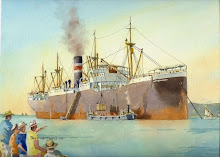
O:s Great art of Tony Westmore
the pakri
The outlook
home

putting out
The tug
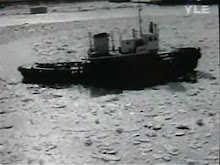
unloading the cargo
ASHER
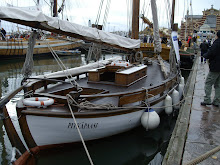

The engineer of the tug Artemis
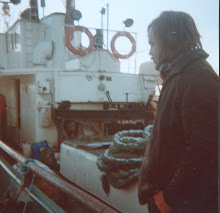
on Mondey
cubana
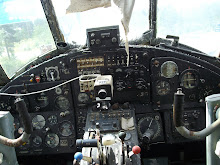
The antony II
the four inmobile men
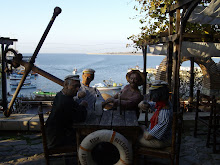
return of the fishermen

the author
The author
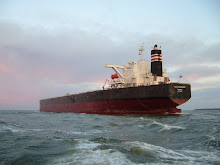
A plain vessel
The tug
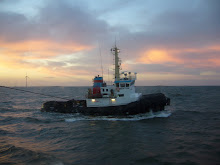
Look out

the fishermen of the Black Sea

The fishermen in the boat
a fleet of tugs waiting the big to come
The stand-by tugs
The cargocarring silingship Norik
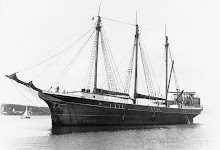
I was on her as o/s 1963
The lake saimaa

The vage

the night

An odd craft

shore

still water
The bridge
The bridge over water in Parnu halbor
Parnu.Estonia
The lifeboat of the sunken ferry Estonia
Newstad in Finland
April 2009
On the road
Eki, who I come upon on the Nessebar
Hard wintern near the borden of Turky
in a small willage
The new book

The Life Apart
The captain's table
The last dinner of the Titanick. the photo taken in 2004 in the maritime museum in Rauma.
January
one cold morning on the Nessebar island
My secound seagoing ship
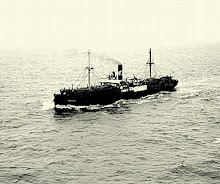
The Angus
traveling with the rocky
The model of the Park Victor
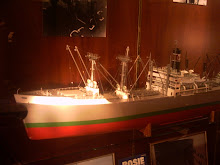
In the maritime museum in Rauma
Kalsham in Sweden
There is a ship, entering the port
One lovely sunset in Vestervik

the sea eagle
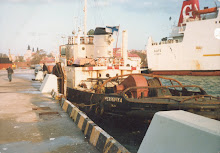
the eagle with the jummping men
The road house
The Ukraina
the kids aside of the road in romania
l
The holy well
haly water in Romania
towing the timper
on the river of saimaa through the ice we towed
The tug
the time before the retirement
The sea barge
Pontius was the tug tha was towing
The ship of...

The books
The books
Flag of Convenience,
bulgarin fisherman
puting out of Nessebar with the fishermen
A river in romaniia
A river in the Carpatian mountai
About Me

- Martin Latimeri
- an old chap, and old salt. have said that middle age begins,not at any particular chronological point in life, but exactly when, early or late, we biging to feel we are going to died.
the albatros
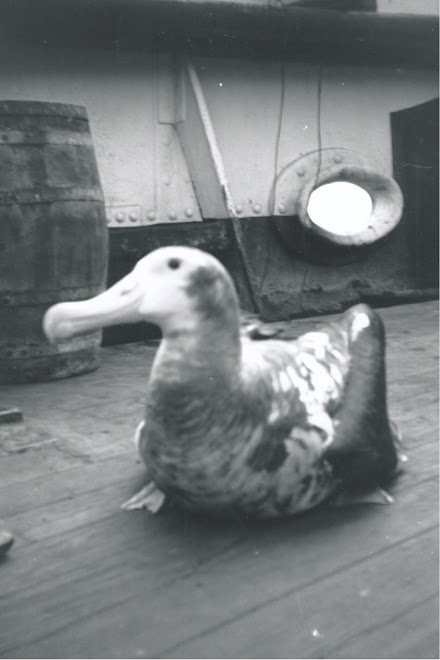
On the road
Iam going to hotel
The tug and the ship
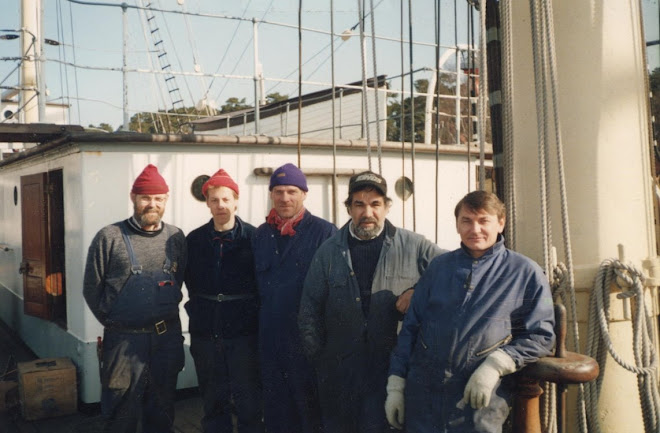
towing
The dunston street

The rive Tyne in my yough
writing the book

The book
The trawler

The end of the adventure with the Russe trawler
Playing in south France

I was tape-regording up the song of my fried in